
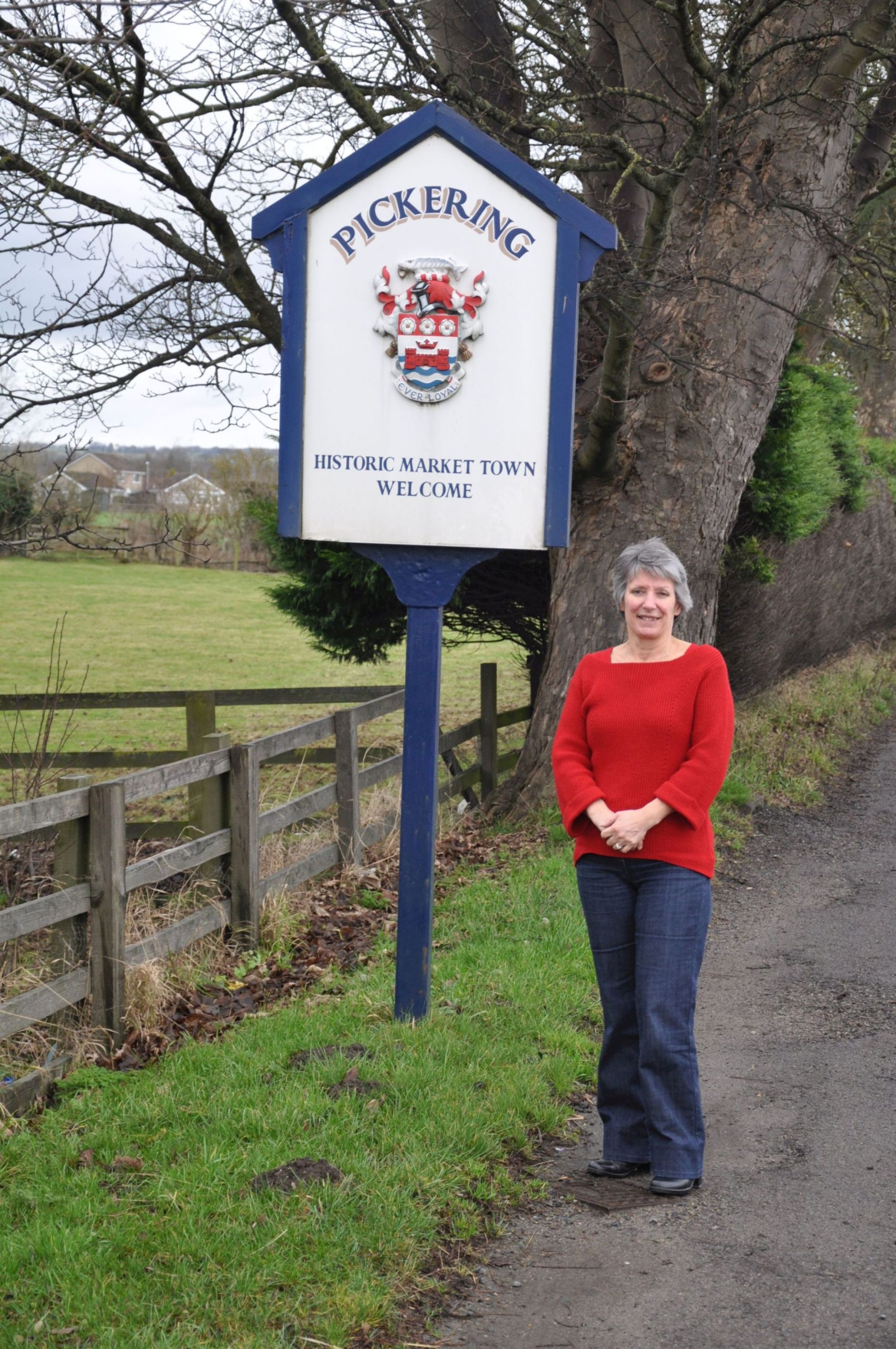
Pickering is an English locational surname, named after the town of Pickering in the North Riding of Yorkshire. There are many theories as to the origin of the name. One claims that it derives from the pre 7th century word Picoringas, meaning the sharp point (pic) of a hill, an edge (ora) and a human settlement (ingas), which translates as ‘the people living on the ridge of the pointed hill’, a fair description of Pickering but almost too neat to be true. (Other sources state that the suffix -ing is Anglo-Saxon, meaning ‘belonging to’, ‘related to’ or ‘son of’.) Another theory bases the name on ‘Piker’ and ‘eng’ (a given name + the Old Norse word for meadow) and yet another states that it derives from the men of the pikes (peaks). The most unlikely origin is the one championed by the Tourist Information Center in Pickering. In its handout it states that Pickering, “according to legend, was given its name by King Peredurus in 270 B.C. We are told that the king lost his ring in the River Costa and accused a maiden of stealing it. When a cook found the ring in the belly of a pike caught in the river, the king married the maiden and called the town Pike-ring” (see the arms of Charles James Pickering and the Pickerings of Alconbury below).
The town of Pickering was recorded as Picheringa in the Domesday Book of 1086. It originally designated a person’s birthplace, but gradually took on more noble connotations. In 1157 Stephanus Pikaringa, son of Gamel, swore on oath in a charter regarding the king’s waste in Pickering Marishes, and in 1165 Reginald de Pichering appears as accountant of 10m. for an amercement regarding Pickering forest. Pickerings were already to be found outside Yorkshire as early as 1246 when a Henry de Pikeringes was mentioned in Oxfordshire, and in 1257 a Henry de Pakering appeared in Somerset. The name had spread to most parts of England by about 1400. Pickering is the spelling used in the family trees throughout this website, although the documents on which they are based show numerous versions: Pykeryng, Pykering, Pykerynge, Pyckeryng, Pykeringe, Pykeryng, Pyckerynge, Pickring, Pickerin, Pickeringe, Pikering, Pekeryng, etc. Most of the people recorded were illiterate and so the different spellings of the name probably depended on the orthographical skills and whims of the clerk. Furthermore, spelling was not subject to hard and fast rules until about 1850.

Coats of arms were introduced to England by the Norman kings. Henry II (reigned 1154-1189) was probably the first king of England to use a heraldic design: a signet ring with an engraving of either a lion or a leopard (1). The design evolved over the following years until gules three lions passant guardant in pale or armed and langued azure (2) were adopted by his son, Richard I, as the royal arms of England, and so they remain until this day. During the same period the nobility was also granted the right to arms. They were initially recorded on a series of rolls of arms, with a description and sometimes a drawing of the shield, together with the name of its bearer. The first roll dates back to 1240s or 1250s and is called Glover’s Roll after the Somerset Herald who transcribed it in 1586. By this time the recording of coats of arms had been conferred upon the kings of arms and the heralds, who visited each county roughly once a generation between 1530 and 1687, recording the pedigrees of the gentry and overseeing the use of arms. Once the visitations had ceased, only pedigrees were recorded; they are held at the College of Arms.
J.P. Brooke-Little, heraldic consultant for The Lives of the Kings and Queens of England, explains that the term coat of arms was derived from the fact that it was “displayed on the coat armour (the coat worn over the mail)”. It was also affixed to the “shield, flag and horse trappings, making it easy to recognise a man from a distance”. He goes on to say that “a coat of arms is inherited, in much the same way as a surname, by the legitimate descendants of the person to whom the arms were first assigned or allowed”. Furthermore “no two people shall bear the same coat”, which led to “the adding by junior members of a family of small marks (brisures)”, such as a star or an annulet (see William Pickering c1495-c1588 below). “In medieval times, when it was necessary to recognize these distinctive marks from afar, they were more dramatic and could involve a change of colour or of a fairly major feature in the coat” (see Cheshire: Walford and Malpas below), “but when heraldry left the battlefield for the book plate the need for such changes disappeared and more modest distinctions were used. Today the rule that junior members of a family must add an appropriate mark of difference to their arms is often more honoured in the breach than the observance”.
As seen above, armorial bearings are hereditary. They can be borne and used by all the descendants in the legitimate male line of the person to whom they were originally granted or confirmed or, in certain circumstances, by the descendants of an heraldic heiress. For an individual to have the right to arms, he or she must be able to prove descent from an armigerous family, i.e. one whose arms have been recorded by the College of Arms. However, where an individual cannot provide proof of such a descent, he or she can petition the College for a grant of arms. There are no fixed criteria of eligibility, but awards or honours from the Crown, civil or military commissions, university degrees, professional qualifications, public and charitable services and eminence or good standing in national or local life are taken into account.
In 2022 I commissioned a study from the College of Arms which was carried out by Adam Tuck, the then Rouge Dragon Pursuivant, today the Lancaster Herald. It covered the pedigrees of the Pickering and Puckering families of Westmorland and Yorkshire and their coats of arms; the latter are reproduced in the first section below. As the Pickerings of the other counties of England were not covered by the study, I cannot vouch for the authenticity of the arms in the second section or their bearers’ right to them, though documentary evidence suggests they are genuine. The third section contains arms that have not been recorded by the College of Arms but have nevertheless been found in various publications. Most originate from outside the counties studied, some are assigned to a family and others remain unassigned. The last two entries are based on spurious claims, bearing witness to people’s desire to be accepted in what used to be – and still largely is – a society based on status and prestige.
(1) In the Middle Ages a leopard was a mythical creature, a cross between a leo and a pard (Greek for lion and leopard).
(2) The terms used in heraldry are explained in the two glossaries listed under Arms in the Sources below.
1. Recorded by the College of Arms
| WESTMORLAND: Killington | |
| Sir James Pickering 1413-1475 Shield: ermine a lion rampant crowned Crest: none shown Record: Visitation of Yorkshire 1563 and 1564 Reference: Coll. Arms MS 1.D.5/3 N.B.: no tincturing shown; deduced from later arms | 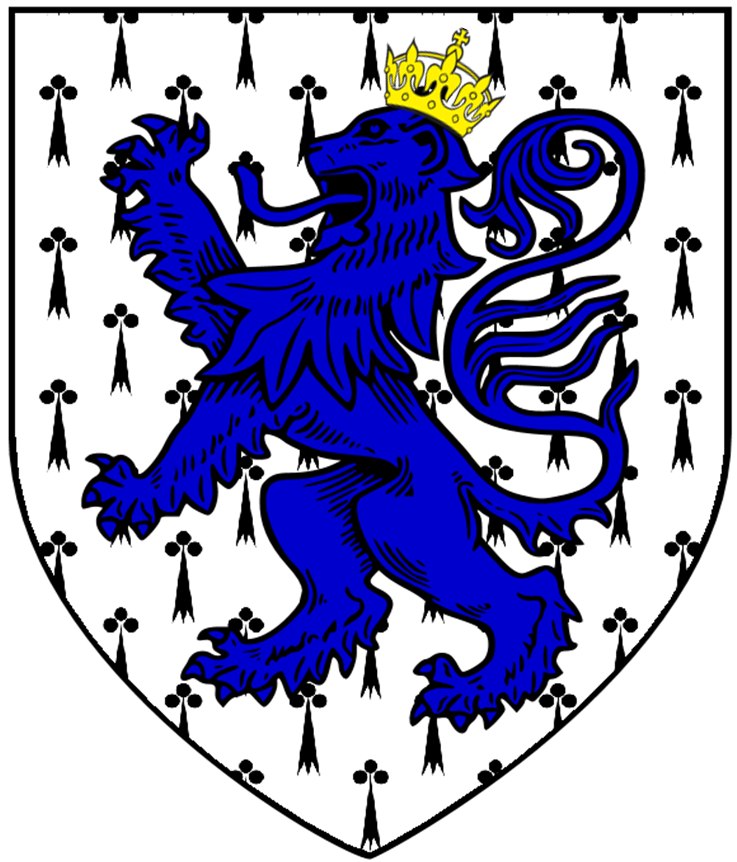 |
| William Pickering c1495-c1588 Shield: ermine a lion rampant azure crowned or charged on the breast with an annulet Crest: none shown Records: Visitation of the Northern Counties 1530; Visitation of Yorkshire 1584-5 References: Coll. Arms MS D.4/49 and Coll. Arms MS 2.D.5/160 N.B.: the annulet is a mark of cadency, denoting a younger son | 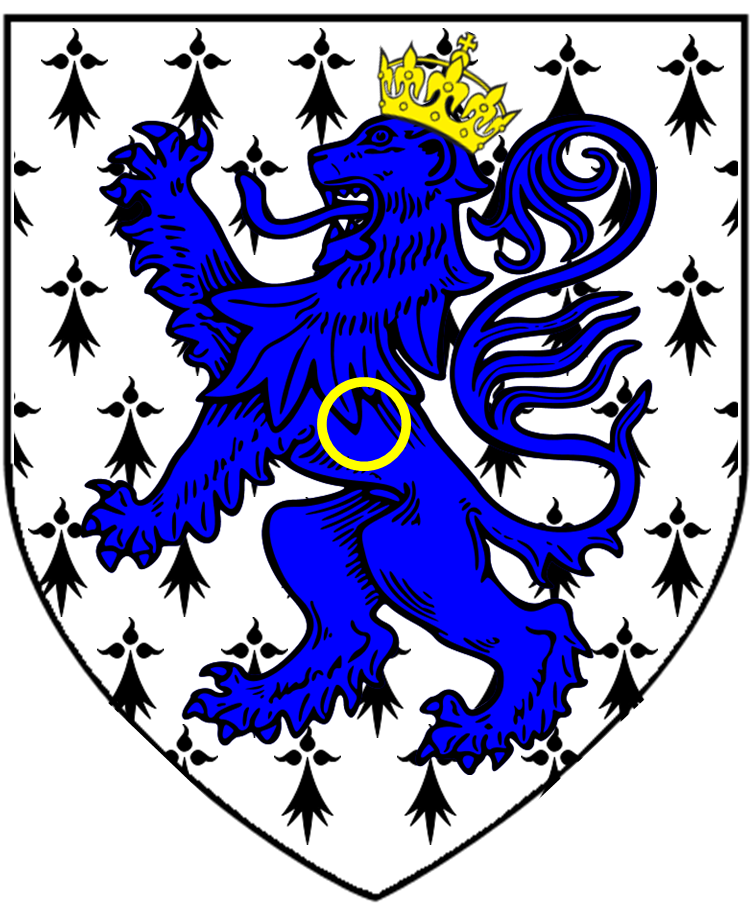 |
| Anne Pickering 1516-1582 Shield: ermine a lion rampant azure crowned or Crest: none (women are not awarded crests) Record: Visitation of Yorkshire 1584-5 Reference: Coll. Arms MS 2.D.5/78 N.B.: Anne was the last of the Pickerings of Killington | |
| YORKSHIRE: Oswaldkirk | |
| Richard Pickering c1330-c1390 Shield: gules a chevron between three fleurs-de-lys or Crest: none shown Record: Visitations of various counties mid 16th century Reference: Coll. Arms MS F.1/82b N.B.: tincture of chevron not shown; deduced from similar arms | 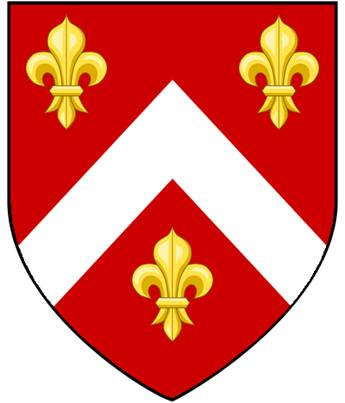 |
| Thomas Pickering c1450-c1510 Shield: gules upon a chevron argent between three fleurs-de-lys or three roundels sable Crest: leopard’s head face or Records: Visitation of Northern Counties 1550 or 1557 References: Coll. Arms MS E.17/95 and 235 N.B.: “Pykeryng, lieth in grey freres, London” refers exclusively to this Thomas Pickering | 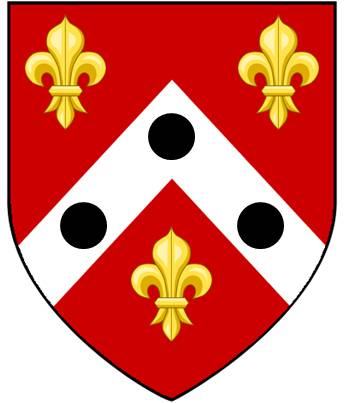 |
| Sir William Pickering 1517-1575 Shield: gules a chevron between three fleurs-de-lys or Crest: upon a wreath or and gules a fleur-de-lys or Record: Funeral certificate Reference: Coll. Arms MS I.10/202 N.B.: tincture of chevron not shown; deduced from similar arms | |
| Hester Pickering c1550-1592 Lozenge: gules a chevron between three fleurs-de-lys or within a bordure ermine Crest: none (women are not awarded crests) Record: Grant of arms 1580 Reference: Coll. Arms MS Old Grants of Arms +/78 N.B.: diamond-shaped lozenges are borne by unmarried, widowed or illegitimate women; tincture of chevron not shown | 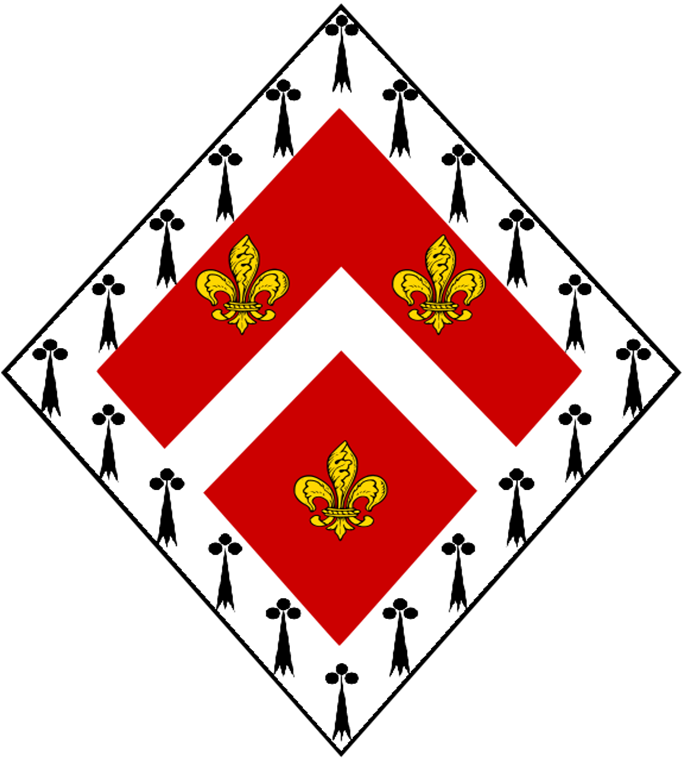 |
| YORKSHIRE: Barlby | |
| Richard Pickering late 14th to early 15th century Shield: gules a chevron or between three fleurs-de-lys argent Crest: none shown Records: Pedigree 1917; Visitation of Yorkshire 1584-5 and 1612, p. 454 Reference: Coll. Arms MS Norfolk 29/157 N.B.: no arms on pedigree; depicted in stained-glass windows of Hemingbrough church at time of herald’s visitation | 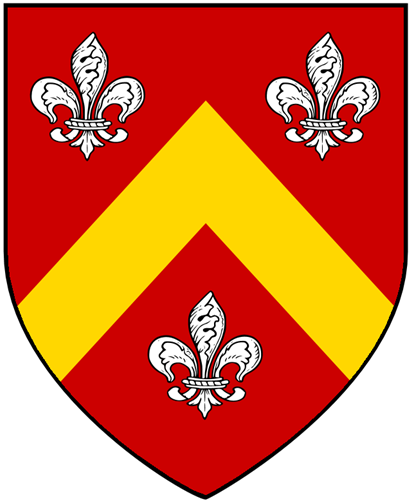 |
| YORKSHIRE: Flamborough | |
| Robert Puckering c1501-c1570 Shield: sable a bend lozengy cotised argent Crest: upon a wreath a reindeer salient argent Records: Visitation of Warwickshire 1619; Grants of arms 17th century References: Coll. Arms MS C.7/2; Coll. Arms MS B.E.D.N./55b N.B.: tincturing incomplete | 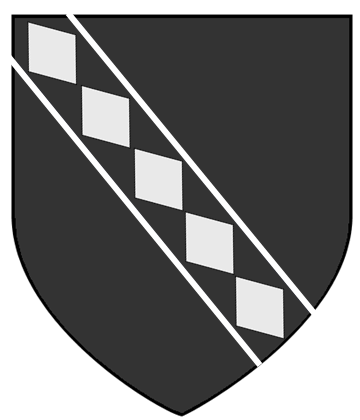 |
| Sir John Puckering c1544-1596 Shield: sable a bend lozengy cotised silver Crest: on a torse silver and sable a reindeer triple-horned rising gold Record: Confirmation of arms 1579 Reference: Coll. Arms MS Oxford Grants 1/103 N.B.: tincturing incomplete | |
| YORKSHIRE: Sutton-on-Hull | |
| Benjamin Pickering 1835-1929 Shield: argent gutte de poix a lion rampant azure between two flaunches each charged with a bear's paw erect and erased argent Crest: on a wreath argent and azure in front of a bear's paw erect and erased argent encircled with a wreath of oak vert a demi Catherine wheel azure Motto: JE GARDE BIEN Record: Grant of arms 1885 Reference: Coll. Arms MS Grants 63/69 N.B.: BP had been bearing arms similiar to those of the Killington family, to which he had no right; they were confirmed by the grant. | 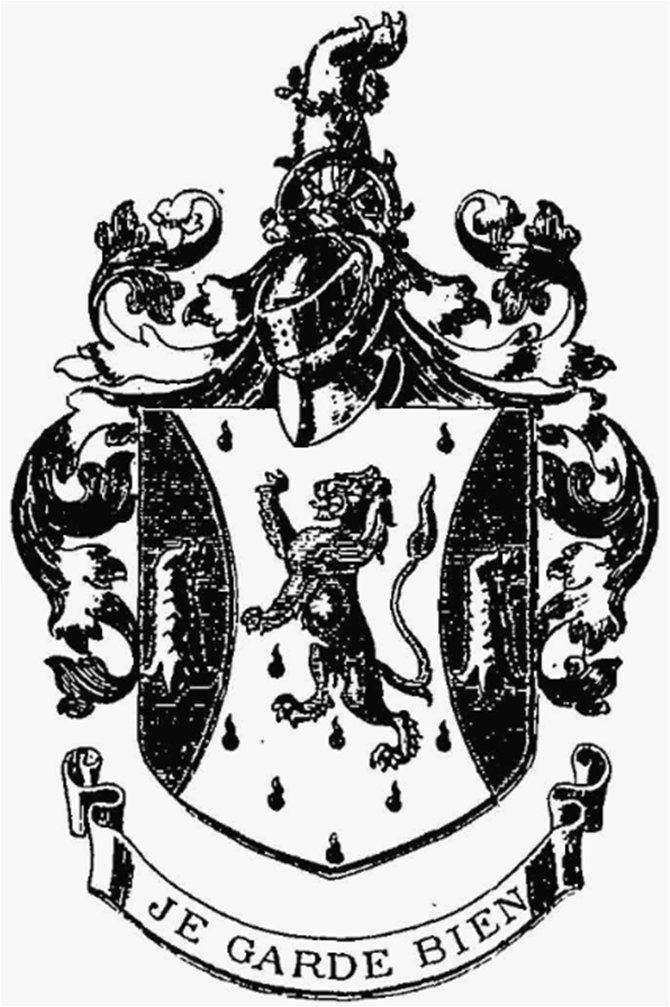 |
| Rachel Pickering c1882-1954 Shield: argent gutte de poix a lion rampant azure between two flaunches bear's paw erect and erased argent a cross-crosslet Crest: none (women are not awarded crests) Motto: JE GARDE BIEN Record: Grant of arms 1912 Reference: Coll. Arms MS Grants 81/205 N.B.: BP’s wife’s niece Rachel Peasegood obtained a Royal Licence to adopt the Pickering surname and BP’s arms. | 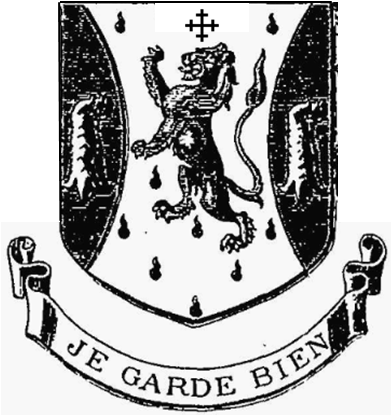 |
| YORKSHIRE: Dewsbury | |
| Charles James Pickering 1880-1951 Shield: argent on a fesse azure two rings or gemmed gules over all a pike in pale proper Crest: on a wreath argent and azure two pike staves in saltire proper interlaced with a ring or gemmed gules Motto: FIDES NON TIMET Records: Grant of arms 1912; Pedigree c1913 References: Coll. Arms MS Grants 81/178 and Coll. Arms Surrey 7/96 N.B.: a visual pun on the grantee’s surname | 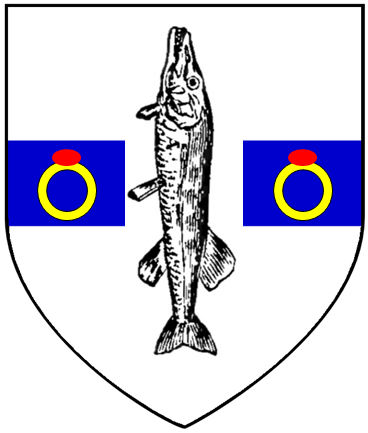 |
| OTHER | |
| Pickering, reign of Edward IV (1461-1483) Shield: gules a fess argent fretty azure between five annulets or two in chief Crest: none shown Record: Grants of arms 17th century; A Roll of Arms belonging to the Society of Antiquaries temp. Henry VIII, p. 98 Reference: Coll. Arms MS E.D.N.56/24 N.B.: first name and origin of bearer not shown | 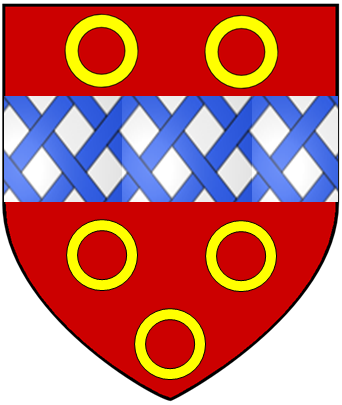 |
2. Pending verification
| WESTMORLAND: Killington | |
| Sir William Pickering c1240-c1270 Shield: ermine a lion rampant azure crowned or Crest: none shown Record: Coucher Book of Furness Abbey, vol. 2, part 1, p. viii N.B.: Sir William married the heiress of the Beethams of Meathop; Pickering or Meathop arms? (see Pickerings of Killington) | |
| Sir Thomas Pickering c1260-c1340 Shield: argent un lion sable od la bordure goules besante or; argent a lion rampant sable within a bordure gules bezanty Crest: none shown Record: A Roll of Arms of the Reign of Edward II, p 94; Transactions of the Cumberland and Westmorland Antiquarian and Archaeological Society, vol. 1, p. 310 N.B.: roll written between 1308 and 1314 | 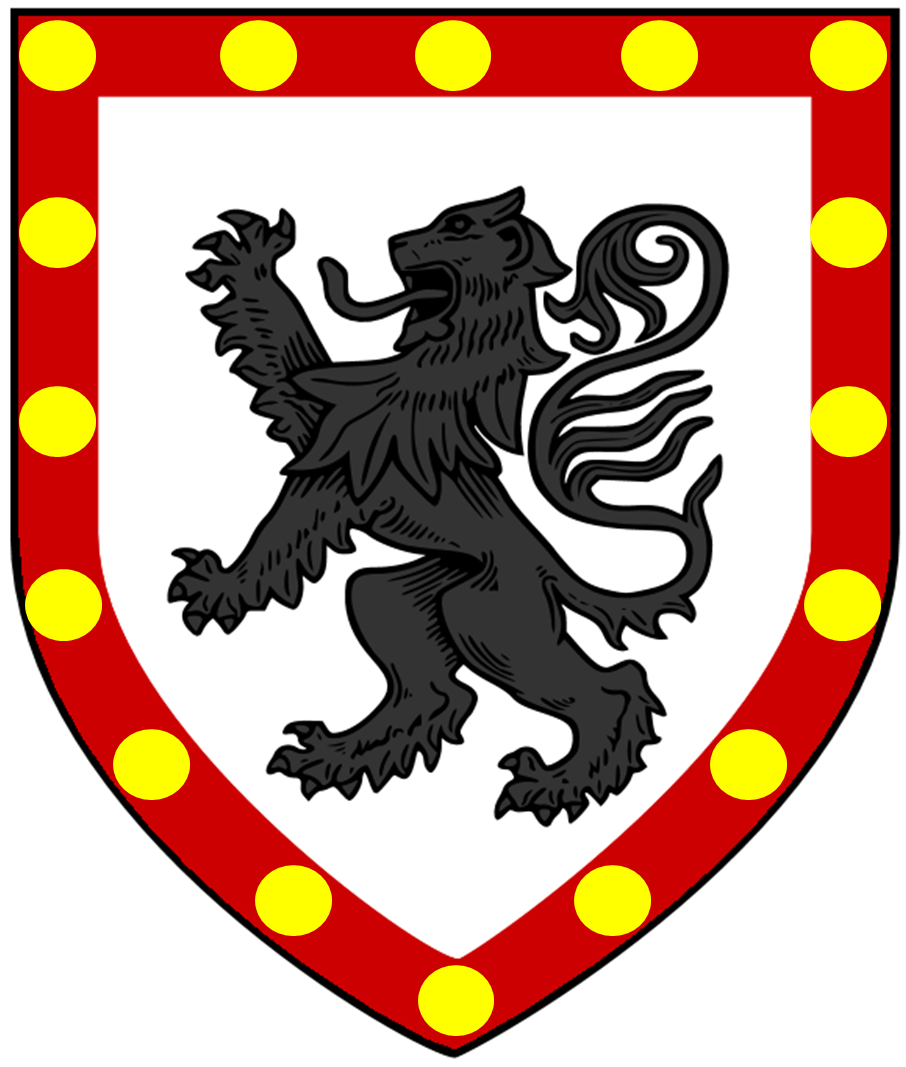 |
| Sir James Pickering c1332-c1406 Shield: ermine a lion rampant azure Crest: none shown Record: Roll of Arms of the Reign of Richard II, p. 18 N.B.: 171. Monsr. James le Pykeryng; preceded by his presumed father 170. Monsr. Robert ----- (same arms) | 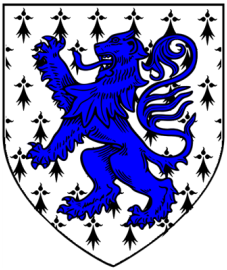 |
| NORTHAMPTONSHIRE: Titchmarsh | |
| Gilbert Pickering c1496-1556 Shield: ermine a lion rampant azure crowned or Crest: a lion's gamb erect and erased azure armed or Record: The General Armory of England, Scotland, Ireland and Wales, p. 801 N.B.: direct descendant of Sir James Pickering 1413-c1475 (see section 1) | 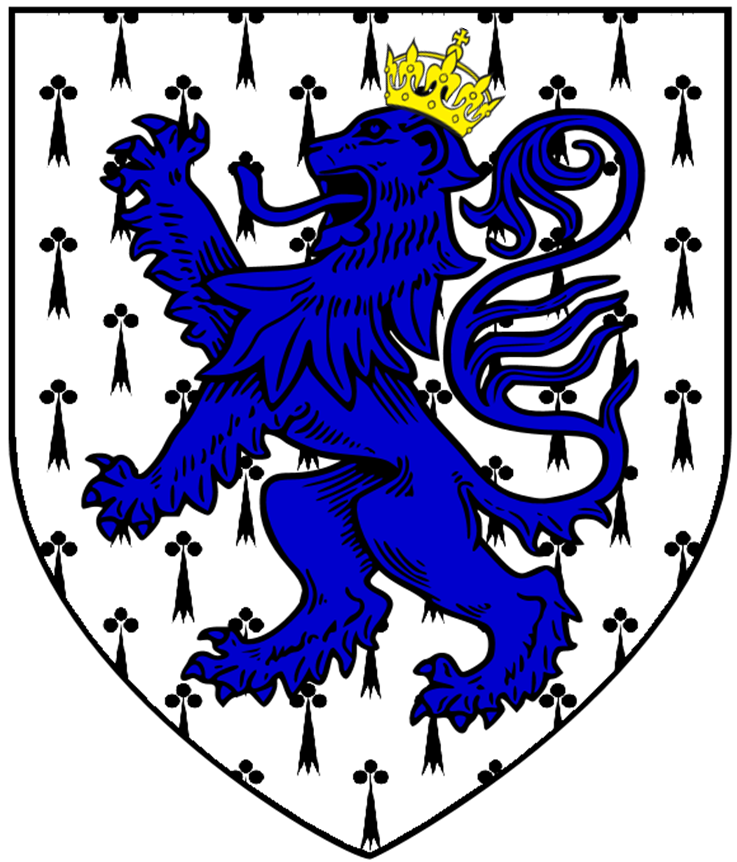 |
| CAMBRIDGESHIRE: Whaddon | |
| Sir Henry Pickering c1605-1668 Shield: ermine a lion rampant azure crowned or Crest: a lion's gamb erect and erased azure armed or Record: The General Armory of England, Scotland, Ireland and Wales, p. 801 N.B.: direct descendant of Sir James Pickering 1413-c1475 (see section 1) | |
| CHESHIRE: Walford | |
| Robert Pickering c1545-1602 Shield: ermine a lion rampant crowned or within a border of eight plates Crest: a lion’s gamb azure erect and erased enfiled with a ducal coronet or Record: Visitations of Sussex 1630 and 1633-4, p. 117; Visitation of Cheshire 1664, p. 405 N.B.: certifications: Sir William Segar c1554-1633, Garter Principal King of Arms; Geo. H. Rogers Harrison c1805-1880, Bluemantle | 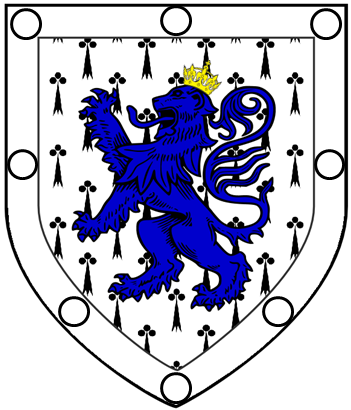 |
| CHESHIRE: Hartford | |
| Pickering of Hartford Shield: ermine a lion rampant azure crowned or Crest: a lion's gamb erect and erased azure armed or Record: The General Armory of England, Scotland, Ireland and Wales, p. 801 N.B.: the Pickerings of Cheshire and the Pickerings of Northampton share the same Y-DNA | |
| CHESHIRE: Malpas | |
| William Pickering 1564-1618 Shield: ermine a lion rampant azure crowned or within a bordure azure Crest: none shown Record: Funeral certificate Reference: Coll. Arms MS 2.E.2/36 N.B.: bearer recorded as Mr. Pickering | 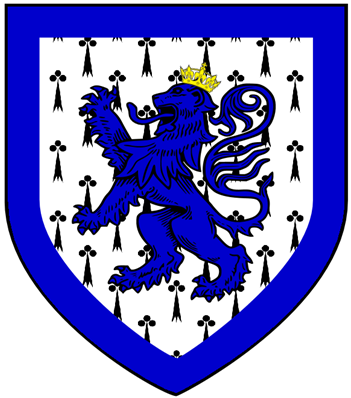 |
| DERBYSHIRE and NOTTINGHAMSHIRE | |
| Pickering, reign of Edward I (1271-1307) Shield: gules on a fess argent between three fleurs-de-lis or as many hurts Crest: none shown Record: Visitation of Nottinghamshire 1569, 1614, p. 188 N.B.: knight of the shire | 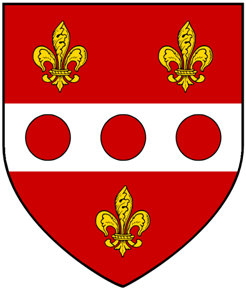 |
| HERTFORDSHIRE and WARWICKSHIRE | |
| Puckering Shield: sable a bend fusily cotised argent Crest: a buck rampant (another courant) or Record: The General Armory of England, Scotland, Ireland and Wales, p. 801 N.B.: no first names or dates shown | |
| LINCOLNSHIRE | |
| Sir Thomas Beckering died 1326 Shield: chequy argent and gules a bend sable Crest: none shown Record: The Nativity Roll c1300; The General Armory of England, Scotland, Ireland and Wales, p. 801 N.B.: originally from Beckering, Lincolnshire; often mistaken for a Pickering | 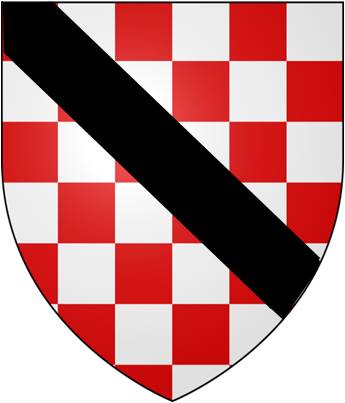 |
3. Unrecorded, unverified, unassigned and spurious arms
| UNRECORDED | |
| Pickering of Thorpe’s Lodge, Yorkshire Shield: ermine a lion rampant azure, ducally crowned or Crest: lion’s gamb azure erect erased armed or Record: The General Armory of England, Scotland, Ireland and Wales, p. 801 N.B.: no first names or dates shown | |
| UNVERIFIED | |
| Pickering of Northamptonshire Shield: or fesse per fesse crenelly gules and azure between three cocks’ heads erased vert combed wattled Crest: none shown Record: The General Armory of England, Scotland, Ireland and Wales, p. 801 N.B.: no first names or dates shown | 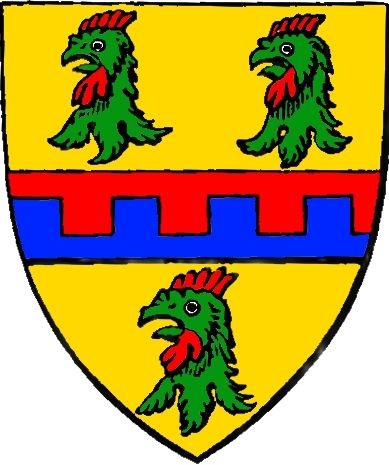 |
| Pickering of Alconbury, Huntingdonshire Shield: gules pike or lucie naiant in fesse between three annulets argent Crest: none shown Record: The General Armory of England, Scotland, Ireland and Wales, p. 801 N.B.: no first names or dates shown | 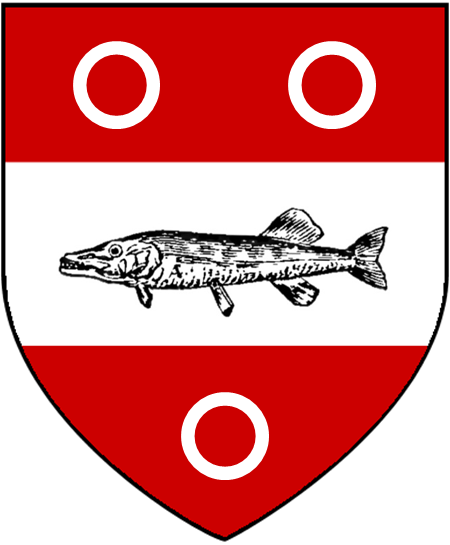 |
| Pickering of Nottinghamshire Shield: gules a chevron argent between three fleurs-de-lys three hurts Crest: a leopard's head couped or semee of hurts Record: The General Armory of England, Scotland, Ireland and Wales, p. 801 N.B.: no first names or dates shown | 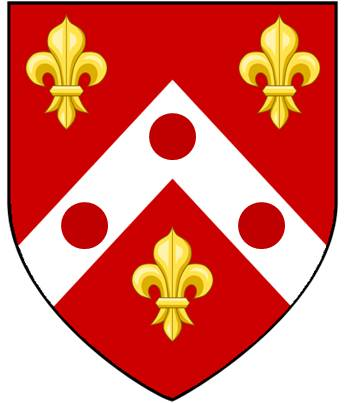 |
| UNVERIFIED and UNASSIGNED | |
| Pickering Shield: argent a lion rampant azure ducally crowned or Crest: sword erect proper hilt and pommel or within two branches of laurel disposed in orle vert Record: The General Armory of England, Scotland, Ireland and Wales, p. 801 N.B.: no first names or dates shown | 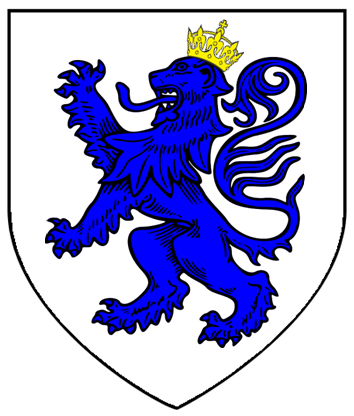 |
| Pickering Shield: gules a fess argent between six annulets or (another adds on the fesse a pellet) Crest: none shown Record: The General Armory of England, Scotland, Ireland and Wales, p. 801 N.B.: no first names or dates shown | 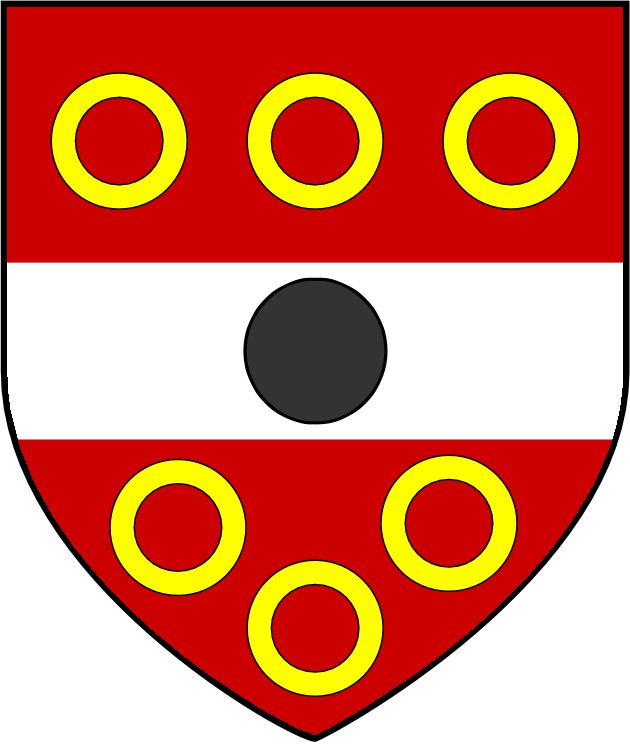 |
| SPURIOUS | |
| Edward Rowland Pickering 1779-1859 Shield: ermine a lion rampant azure armed gules crowned or Crest: a lion’s gamb erect and erased Record: The General Armory of England, Scotland, Ireland and Wales, p. 801 N.B.: claimed descent from the Pickerings of Killington, but belongs to the Pickerings of Barlby; lived Old Lodge and Clapham, Surrey | 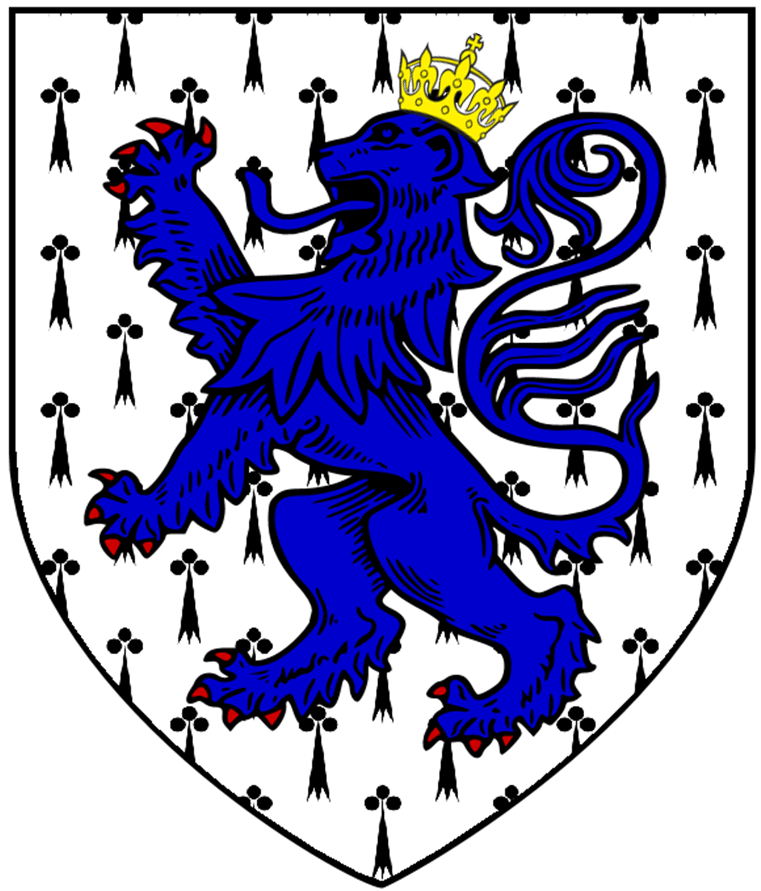 |
| Pickering of Coverham Shield: gules a chevron argent between three fleurs-de-lys 3 annulets sable Crest: a lion’s gamb azure erect and erased Record: The General Armory of England, Scotland, Ireland and Wales, p. 801 N.B.: a combination of the Oswaldkirk shield and the Killington crest | 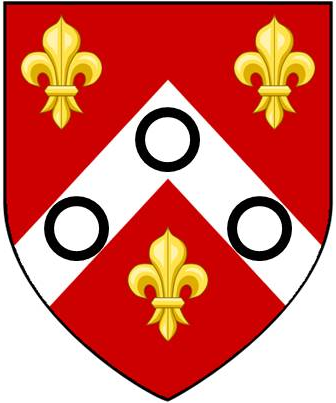 |
Sources:
Research into Pickering or Puckering of Westmorland and Yorkshire by the College of Arms, 2022: https://www.college-of-arms.gov.uk
Adam Simon Tuck M.A., Lancaster Herald: https://www.college-of-arms.gov.uk/about-us/heralds-officers
Name:
Surname Database: http://www.surnamedb.com/Surname/Pickering#ixzz1crCulOVF
Forebears: https://forebears.io/surnames/pickering
English Place Names: http://www.englishplacenames.co.uk
Domesday Book: http://opendomesday.org/place/SE7984/pickering
Arms:
https://en.wikipedia.org/wiki/Coat_of_arms
https://en.wikipedia.org/wiki/Coat_of_arms_of_England
https://guernseydonkey.com/the-origins-of-englands-three-lions
https://en.wikipedia.org/wiki/Roll_of_arms
An Introduction to Heraldry: https://dn790002.ca.archive.org/0/items/introductiontohe00claruoft/introductiontohe00claruoft.pdf
A Roll of Arms of the Reign of Edward II, p. 94: https://archive.org/details/ARollOfArmsOfTheReignOfEdwardTheSecond.1829/page/n123
A Roll of Arms of the Reign of Richard II, p. 18: https://dn790003.ca.archive.org/0/items/rollofarmsofreig00willrich/rollofarmsofreig00willrich.pdf
A Roll of Arms belonging to the Society of Antiquaries, temp. Henry VIII, p. 98: https://ignca.gov.in/Asi_data/24482.pdf
The Nativity Roll c1300, shield 60: http://www.aspilogia.com/M-Nativity_Roll/M-43-79.html
The Coucher Book of Furness Abbey, vol. 2, part 1, p. viii: https://archive.org/details/coucherbookoffur741manc/page/n17
Transactions of the Cumberland and Westmorland Antiquarian and Archaeological Society, vol. 1, pp. 310, 314, 317: https://archive.org/details/transactionscum25collgoog/page/n399
The General Armory of England, Scotland, Ireland and Wales, p. 801: https://archive.org/details/generalarmoryofe00burk/page/801
Encyclopaedia Heraldica / Complete Dictionary of Heraldry, vol. 2: https://books.google.fr/books?id=bfNfAAAAcAAJ&pg
A Glossary of Terms used in Heraldry: http://www.heraldsnet.org/saitou/parker/index.htm
Burke’s Peerage, Heraldry Glossary: https://www.burkespeerage.com/heraldry_glossary.php
The Lives of the Kings and Queens of England, 1975 edition: not on line
Coat of Arms Design Studio: coatofarmsdesignstudio-setup.exe
Visitations:
https://en.wikipedia.org/wiki/Heraldic_visitation
Visitation of the North of England circa 1480-1500, p. 131: https://ia902903.us.archive.org/17/items/visitationsnorth03/visitationsnorth03.pdf
Visitation of the Northern Counties 1530, p. 97: https://books.google.fr/books?id=ve0OvvM9qr8C
Visitation of Yorkshire 1563 and 1564, pp. 250-251: https://archive.org/details/visitationofyork00flow/page/250
Visitation of Yorkshire 1584-5 and 1612, pp. 630, 627, 281, 403: https://www.familysearch.org/library/books/viewer/219604
Visitations of Yorkshire and Northumberland 1575, pp. 21, 166,: https://web.archive.org/web/20140113223434/http://www.uiowa.edu/~c030149a/northern/surtees146text.pdf
Visitations of Cumberland and Westmorland 1615 and 1656: https://archive.org/details/pedigreesrecorde00sainrich/page/106
Visitations of Sussex 1630 and 1633-4, p. 117: https://archive.org/details/visitationsofcou5354beno/page/n134
Visitation of Cheshire 1664, p. 405: https://books.google.fr/books?hl=fr&id=qiQFAAAAQAAJ&q
Visitation of Nottinghamshire 1569 and 1614, p. 188: https://archive.org/details/visitationscoun01britgoog/page/n200